Saturday, July 25, 2020

Three Reasons Family Stories Get Lost

Why is information about our ancestors lost to future generations?  Here's 3 reasons that had an impact on my own family.

Family member name: Nelson F. Smith
Lifetime: 1859-1910
Tree branch: Smith
Relation: My 2x great-grandfather (my dad's mom's dad's dad's)

The lost story
My 2x great-grandfather, Nelson F. Smith grew up in a lighthouse.  Yes! A super cool, famous lighthouse called Chatham Light on Cape Cod.  My family was completely unaware of this until I found it through my family tree research.  But this was relatively recent family history, so how does information like this get lost?  Imagine the stories of storms and rescues and close calls!

Just to be clear, Nelson F. Smith was my grandmother's grandfather.  My grandmother just passed away a few years ago at the age of 98.  She never told us that her family had any connection to Chatham Light, even when we visited Chatham with her.  I don't think she knew.  How could she not have known?  Isn't fun family information passed down to the next generation?

1. Early death
Of course, early death is a major reason why stories don't get passed on to future generations.  Nelson Smith died in Boston at the age of 51 from complications of an infection in his heart.  He died five years before my grandma was born.

So grandma did not receive firsthand information from her grandfather.  However, why didn't her father, Charles Nelson Smith, tell her that HIS own father grew up in a lighthouse?  He may not have known either.  Why not?

2.  Separation
My great-great-grandmother Fannie Naomi was a single mom.  (She is the little girl in the tintype in my last blog post.) She and Nelson divorced at some point, which was very taboo at the time. She moved in with her brother, Francis Gibbs, in Fairhaven, Mass.  So my great-grandfather was not raised by his own father. Uncle Frank was the father figure in his life.  

The marriage of Fannie Naomi Gibbs and Nelson Smith did not get off to the best start.  They were married on Tuesday, March 22, 1887, and 4 months later (yikes! the #1 taboo at the time), little Charles was born on July 25, which is 133 years ago today. 

So, because of the unplanned pregnancy, the rushed wedding and subsequent divorce, Charles may not have had a substantial relationship with his own father, Nelson, and therefore never heard about his childhood in the lighthouse firsthand.

Charles Nelson Smith, my great-grandfather, sporting the world's best bow tie, may not have had a relationship with his father, who grew up in a lighthouse.

3. Hurt feelings
Was there bad blood?  Who divorced who?  Was Charles' father, Nelson, even mentioned at all in conversations?  Did he ever visit him?  Even if Charles knew about his father's childhood in the lighthouse, was there so much hurt that he didn't speak of him to his wife and daughter later in life?  We don't even have a picture of Nelson.

We don't know the circumstances of their relationship, marriage or divorce.  But since such a key piece of information in family history went missing so quickly, it must have been a combination of death, separation and hurt feelings that they just couldn't bear to repeat the stories of the lighthouse.


Wednesday, July 15, 2020

Tintypes

Want to see one of my favorite old family photos?  It's from 1868.  

1868: My great-great grandmother Fannie Naomi Abby Gibbs, about 3 years old and her older brother.

Actually, my family has several pictures dating from the 1860s.  However this one stands out since it includes children.  Who are they?  

Family member name: Fannie Naomi Abby Gibbs
Lifetime: July 15, 1865 (born 155 years ago today) - July 11, 1941
Tree branch: Smith
Relation: My 2x great-grandmother (my dad's mom's dad's mom)

Family member name: Lysander Gibbs
Lifetime: 1856-1923
Tree branch: Smith
Relation: My 3rd great-uncle (my dad's mom's dad's mom's brother)

I love this picture.  It's a tintype.  What is that?


A very underexposed negative image was produced on a thin iron plate. It was blackened by painting, lacquering or enamelling, and coated with a collodion photographic emulsion. The dark background gave the resulting image the appearance of a positive.

Believe it or not, that is the most non-technical definition I could find of a tintype. I really still have no idea what that means, but here's what I learned about tintypes:

  • Tiny, usually 2x3 inches
  • Made of thin iron, not flexible
  • Mounted in paper or cardboard cases
  • Developed in a darkroom in just minutes (a big advancement for the time)
  • Inexpensive
  • In use in the 1860s and 1870s

Notice this tintype has been ever so slightly hand tinted.  Do you notice the kids' pink cheeks? 

And how cute are they?  Isn't it great to see pictures of your grandparents and other ancestors as children? It reminds us that they had lives before we knew them.  Unfortunately, this darling girl's life probably didn't turn out the way she wanted it to.  Stay tuned for an upcoming post...

Wednesday, July 1, 2020

A Business Deal

They were not related, but they're both related to me.  I found their business contract in the Woodstock, Connecticut Town Hall labeled "Morey to Morris".  Let's read it.

Date
February 24, 1775 and in the 15th year of his Majesty's reign

What was Purchased
"A certain tract or parcel of land... by estimation thirty acres be the some more or less with the dwelling house and barn thereon standing and shop adjoining"

Where
"Woodstock in the County of Windham and Colony of Connecticut in New England"

The Seller
Family member name: Ephraim Morey
Lifetime: 1710-1794
Tree branch: Pearson
Relation: My 6x great-grandfather 


The Buyer
Family member name: William Morris
Lifetime: 1740-unknown date of death (after 1790)
Tree branch: Pearson
Relation: My 5x great-grandfather


Price
"The sum of One Hundred Pounds"

I love that my ancestors knew each other!


I scanned this document from a book of land records from the Woodstock Town Hall in 2016.


How I am related to the buyer and seller. You can see that William is from the Morris side and Ephraim is from the Titus side (both from my paternal line).

Here is the book.  There was an index at the front where I saw their names so I didn't have to look through every single page.  But I did end up looking through as many books as possible that day. This picture was taken in the 2 seconds that the lady left the room.  No pictures were allowed, but scanners were allowed. (huh?)


Source:
Woodstock Land Records, Vol 6, 1743-1787

Sunday, June 28, 2020

The Big Reveal

I found a piece of interesting information about my dad's 2x great-grandfather and wanted to tell him in person to see his reaction.

Family member name: Charles H. Smith
Lifetime: 1825 - 1900
Tree branch: Smith
Relation: My 3x great-grandfather (my dad's mom's dad's dad's dad)

I was researching the Smith side of my family, and I found that the Smiths lived in an interesting place.

The next time my dad and step-mom came for a visit, I printed out the 1865 Massachusetts State Census and walked them through the process I had recently completed to let them find the information on their own.  

Here's the video.  I'm pretty sure they didn't see I was recording. :)


So fun!

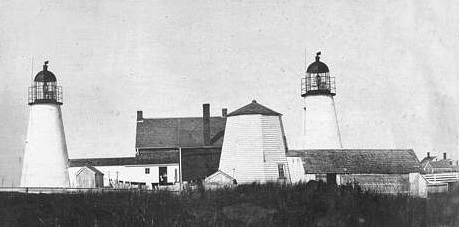
My 3x great-grandfather was the light keeper of Chatham Light, a famous lighthouse on Cape Cod.  My dad has visited most of New England's lighthouses by land or by kayak, and I knew he was quite familiar with Chatham Light.  So to find out that his direct ancestor (his 2x great-grandfather) lived there and manned the lighthouse for 10 years, from 1862-1872, is pretty cool!  Also, my dad's great grandfather, Nelson, grew up in the light keeper's living quarters.

Why did no one in my family know about this??  Stay tuned.

This is what the Twin Lights in Chatham looked like when our ancestor was light keeper.


1841 brick towers.

To read more about the quest for the Smiths, read my previous blog post here.

Sources
Wikipedia > Chatham Light
National Register of Historic Places in Barnstable County
Tours of Chatham Light


Sunday, May 10, 2020

Namesakes: My five Euphemias

Euphemia (pronounced you-FEM-ee-ah or oh-FEM-ee-ah) is not a common name these days.  According to the Social Security Administration, its peak popularity as a baby name in the US was between 1903 and 1915.  However, it is more popular in Scotland.

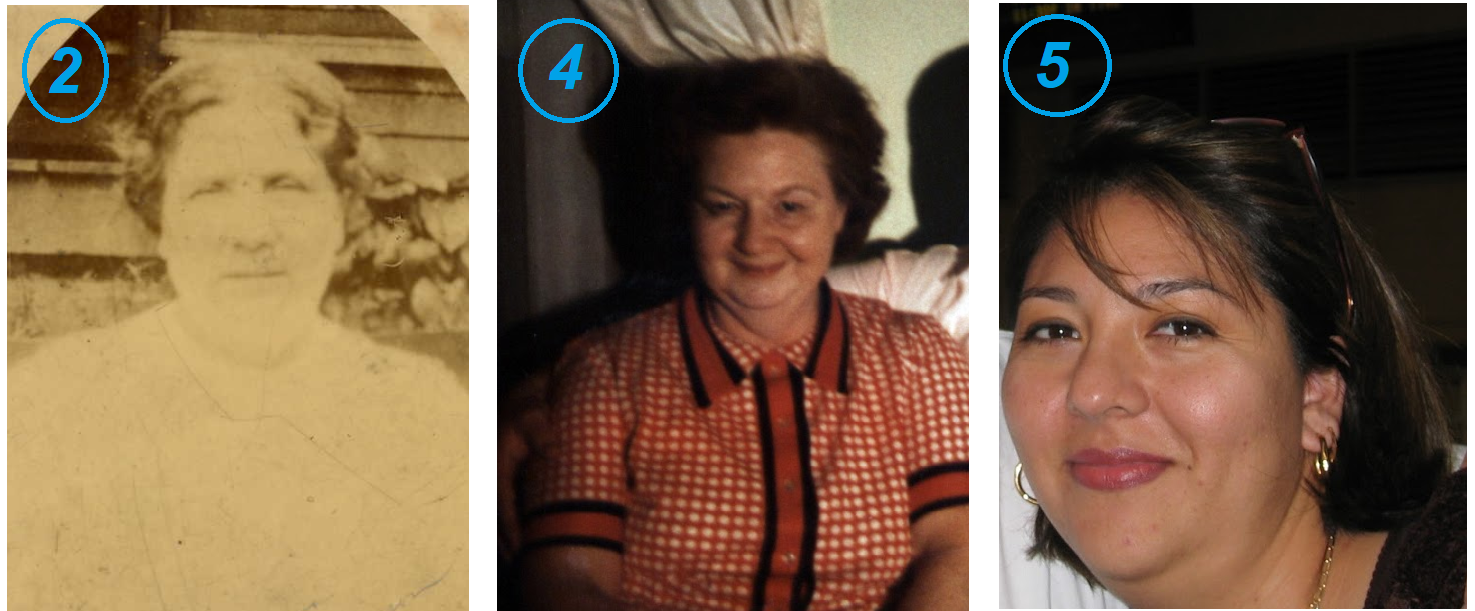
I'm happy to have FIVE Euphemias in my family.

Euphemia #1
Family member name: Euphemia McMillen
Lifetime: 1785 - unknown
Tree branch: Boyle
Relation: My 4x great-grandmother (my mom's dad's mom's mom's mom's mom)

Born in Glasgow, Scotland in 1785.  We don't know much about her except that one of her children was Agnes Gilchrest, who named her own daughter after her mother.  (See Euphemia #2)

Euphemia #2
Family member name: Euphemia Crosser Anderson
Lifetime: 1859 - 1918
Tree branch: Boyle
Relation: My great-great-grandmother (my mom's dad's mom's mom)

Named after her grandmother, she was born in Scotland and married Robert Anderson there. At the age of 35, they moved to the United States and settled in Indiana.  Among their 15 (!) children, they named their 8th Euphemia.

Euphemia #3 - nicknamed Effie
Family member name: Euphemia Anderson Moss
Lifetime: 1887 - 1917
Tree branch: Boyle
Relation: My 2nd great-aunt (my mom's dad's mom's sister)

Named after her mother, she was also born in Scotland and was 7 when she came to the US.  She married and had a daughter, named Mildred Euphemia.  Unfortunately, both she and her 6-year old daughter were killed in a tragic car accident on May 10, 1917, which is 103 years ago today.

Euphemia #4 - nicknamed Famie
Family member name: Euphemia Catherine Boyle Koos
Lifetime: 1918 - 1988
Tree branch: Boyle
Relation: My great-aunt (my mom's dad's sister)

Named after her grandmother or aunt who both passed away shortly before her birth. I remember Aunt Famie from our visits to grandma and grandpa's in Michigan.  My mom describes her as "bright and opinionated and suffered no fools." For her husband Vic's work, they moved their young family to Geneva, Switzerland for several years.  


Euphemia #5 - nicknamed Phemie (Phemia in Spanish)
Family member name: Euphemia Melissa Hight Hargreaves
Lifetime: 1975 - 
Tree branch: Hargreaves
Relation: My sister-in-law

A completely British name for my wonderful sister-in-law with Mexican heritage. She was named after her great-grandmother, Eufemia Rosales Osuna from Sinaloa, Mexico.  Fun-loving and smart, she's raising her two lovely daughters in sunny California.

I'm happy to have a picture of 3 out of 5 of my Euphemias.


Sunday, April 19, 2020

The Lexington Alarm

Today is April 19.  245 years ago today the Battle of Concord and Lexington began the American Revolution.  A newspaper article written in 1902 about my family said that one of my ancestors fought in those battles.  Did he?

Family member name: William Morris
Tree branch: Pearson
Lifetime: 1740 - died sometime after 1794
Relation: My 5x great-grandfather (my dad's dad's mom's mom's mom's dad's dad)


See my previous blog post with a full transcription of the article. The article stated,
"Mrs. Titus, too, seems to have come from a family as patriotic as that of her husband, for her paternal grandfather, William Morris, was in the battle of Concord and Lexington and rose in the service until he became a first lieutenant."
Wow! Imagine that, what are the odds?!  Upon reading it, my emotions went from awe to disbelief in about one minute.  (But it was a fun minute!)  I had to investigate this William Morris person.

William Morris was born and lived in Woodstock, Connecticut, not to be confused with Woodstock, New York of music festival fame.  Woodstock is 68 miles from Lexington, Massachusetts.  In April 1775, William could not have fought in the Battle of Concord and Lexington because those battles were fought by Minutemen who lived in those towns and who mustered to Lexington Green in a minute after being awakened by Paul Revere.  Grandpa Morris was simply not there.  The article was incorrect.

However, here is the excerpt from William Morris' military service which may be the cause of the confusion.
"William was clerk of the company which marched from Woodstock in response to the Lexington Alarm."
What is the Lexington Alarm? Once Paul Revere stopped riding, other messengers got on their horses to pick up where he left off.  They rode to other towns to give them the news about Lexington and Concord.  Town militias had already been organized all over New England and the other colonies.  When these volunteer soldiers heard of the fighting, they marched "for the Relief of Boston," including 34-year-old William.  The Lexington Alarm began with Paul Revere's ride and continued with the colonies' response to the beginning of the war.  The Lexington Alarm is not the name of the battle on April 19.  (See timeline on nps.gov)

About 10,000 men marched for days to help defend Boston from the British.  Besides the Rhode Island volunteers, who were somewhat equipped and organized, the rest of the men could hardly be described as "in the military." After reading firsthand accounts of the situation, the camps in the fields and meadows around Boston can only be described as makeshift shelters full of filthy, drunk men. (OK, now you can think about Woodstock the music festival, but with no women or music.)

Since Grandpa Morris only served six days in the Lexington Alarm, they probably marched to Boston, saw they were not needed, then went home to Connecticut. He later served in other regiments.

Here is the link to his page on the Daughters of the American Revolution website: Ancestor #A080956

Researching family history in Woodstock, Connecticut, 2016.


Saturday, April 18, 2020

The other respiratory illness

While the world is gripped with the Coronavirus, here is a post about another respiratory illness that one of my family members lived through, tuberculosis.

Family member name: Eleanor Webber
Tree branch: Webber
Lifetime: 1921-2010
Relation: My great-aunt (my father's father's sister)


Unfortunately I never spoke with Auntie Eleanor about her ordeal with tuberculosis.  All I know is a couple stories from my dad and some entries from Eleanor's mother's diary.

Eleanor's mother (my great grandmother), Mattie, kept a little diary of important events in her life. One was November 16, 1942: "E. goes to Channing Home"
Mattie's diary

Channing Home was originally named Channing Street Home for Sick and Destitute Women.  (Source: Brigham and Women's Hospital) Founded in 1857 as a refuge for poor women, it later became a nationally known center for the treatment of women with tuberculosis.  As my father recalls, Eleanor spent years (perhaps seven years!) in an institution for her treatment of TB.  Perhaps Channing Home was that institution.


The treatment for TB involved complete and horizontal bed rest and, believe it or not, social distancing and separation from family, especially children.  


A screen shot from Google Maps of the address of Channing Home.
Also from Mattie's diary: "April 30, 1946 - Dr. Overholt at Deaconess removes E's lung.  Successful. Oxygen tent."

Who was Dr. Overholt? In the 1930's he performed the first successful removal of a right lung on a cancer patient.  Eleanor had one of the best doctors in the country.  Here is the link to his obituary in The New York Times.

Poor Eleanor.  She perhaps started her treatment at age 21 and had her lung removed at age 25.  Basically her 20's were gone.  How sad to spend some of the prime years of your life in a hospital, and some in an oxygen tent. Thankfully, she recovered and lived a long life.  She was a sweet, beloved piano teacher in her hometown, Needham, Massachusetts.  She passed away just one week short of her 89th birthday.


Mattie and Eleanor Webber